Shuffle Attention for Deep Convolutional Neural Networks (SA-Net)
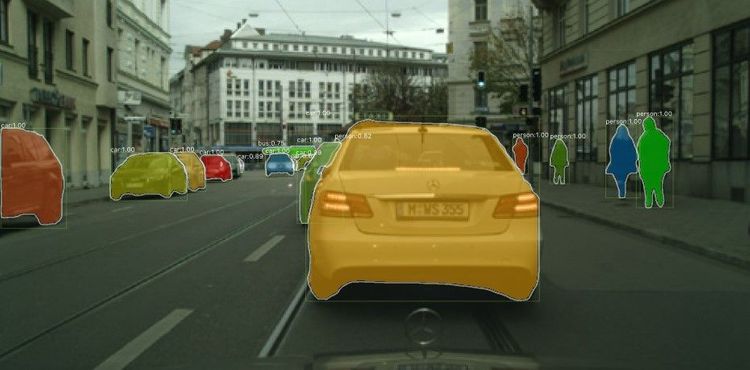
This article gives an in-depth summary of the ICASSP paper titled "SA-Net: Shuffle Attention for Deep Convolutional Neural Networks."
5 years ago
This article gives an in-depth summary of the ICASSP paper titled "SA-Net: Shuffle Attention for Deep Convolutional Neural Networks."
AWS SageMaker Studio Notebooks are feature-rich and yet present a number of difficulties when getting started and when trying to understand pricing. Here we take a look at the favorable and unfavorable comparisons with Gradient Notebooks from Paperspace.
Google AI Platform Notebooks are enterprise-grade notebooks best suited for those with compliance concerns who need to ingest data from GCP sources like BigQuery. Gradient is more like Google's other notebook product Colab but with advanced features.
In this post, we will cover a novel form of channel attention called the Style Recalibration Module (SRM), an extension of the popular TPAMI paper: Squeeze-and-Excitation Networks.
In general, Azure notebooks are best for those who'd like to take advantage of starter credits from Microsoft or for those who are already entrenched in the Azure computing ecosystem while Gradient is best for running Free CPU and GPU instances without a lot of startup time or hassle.
This series gives an advanced guide to different recurrent neural networks (RNNs). You will gain an understanding of the networks themselves, their architectures, their applications, and how to bring the models to life using Keras.
In this article, we'll discuss pruning neural networks: what it is, how it works, different pruning methods, and how to evaluate them.